

The Slumber Studios blog
Gentle guides to falling asleep — what to listen to, why it works, and how we make it.
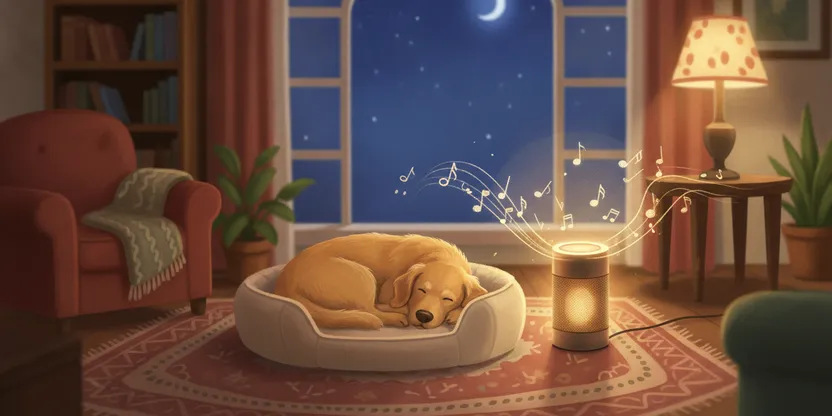
Does calming music actually work on dogs?
Researchers have spent 20 years playing music to shelter dogs. What they found is more useful and more surprising than 'dogs like classical.'
Read more
Does background sound help you focus? It depends on you
The research on sound and concentration has a clear answer, and it's not the one productivity blogs give: it helps some people and measurably hurts others.
Read more
Cognitive shuffling: the viral sleep trick and its one study
Every outlet calls it science-backed. The evidence is one unpublished conference poster by the man who sells the app. The mechanism underneath is sturdier.
Read more
Fall Asleep to Jane Austen: The Right Kind of Interesting
The best story for sleep is neither boring nor thrilling. It gives a busy mind somewhere else to go, without making it stay for the ending. Jane Austen may have found that balance better than anyone.
Read more
The best sleep sounds apps (and how to pick yours)
The features that matter in a sleep sounds app (offline play, all-night audio, real recordings) and which app fits which kind of sleeper.
Read more
Weighted blankets for sleep: a surprisingly strong trial
One randomized trial with a clever control found an effect size most sleep interventions never reach. The population it was run in is the thing to check before buying.
Read more
The military sleep method: no research, decent ingredients
The famous two-minute technique comes from a 1981 track coach's book and has never been tested. Every component in it has been tested separately.
Read more
How to sleep with noise you can't turn off
When the noise is external, internal, or the thing that sets you off — and what to do when sound doesn't work on you at all. Four problems, graded separately.
Read more
Does classical music help you sleep? What the research shows
Thirteen trials say music improves how you rate your sleep. Sleep labs are less impressed, and one study hints that stripping out the lyrics may leave more earworms, not fewer.
Read more
How accurate are sleep trackers? And the risk of believing them
Consumer trackers are good at knowing you're asleep and bad at knowing you're awake. Sleep clinicians have a name for what happens when you trust the score too much.
Read more
Yoga nidra and NSDR: what the sleep research shows
A guided body-scan practice with a rebrand and a lot of momentum. The polysomnography is intriguing; the pooled trial evidence is weaker than the hype suggests.
Read more
Binaural beats for sleep: what the evidence supports
Two slightly different tones, one in each ear, and a claim about brainwave entrainment. The research is better than you'd expect in one area and absent in another.
Read more
Does mouth taping work? What the review found
The most controversial sleepmaxxing habit has now been reviewed properly. The benefit is thin, and the risk is serious enough that the authors used the word asphyxiation.
Read more
The body scan for sleep: the technique inside every other technique
It sits inside MBSR, yoga nidra, and half the sleep meditations on your phone. It has also never been tested on its own, which makes the one thing patients said about it interesting.
Read more
Why nature sounds calm you down, according to actual research
Rain, birdsong, running water: scientists have been testing why these sounds relax us. Here's what the studies found, minus the hype.
Read more
The sleepy girl mocktail: does tart cherry juice work?
Tart cherry juice, magnesium, and fizzy water. Two of the three ingredients have trials behind them, and both are smaller than the recipe's reputation.
Read more
Does sleep meditation actually work? What the trials found
Meditation is the most-studied thing on the bedtime relaxation list, and the results are far more equivocal than the apps selling it will tell you.
Read more
White, pink, and brown noise: what the colors actually mean
What the noise colors are, what the research really says about them, and how to pick yours, including the truth about brown noise.
Read more
Sleeping with sound: the complete guide
What sound can and can't do at bedtime, graded against the research, with a pointer to the right sound for your particular problem.
Read more
Magnesium for sleep: what three small trials found
The supplement aisle's favorite sleep aid rests on three randomized trials in 151 people, all at moderate-to-high risk of bias. Here's what they add up to.
Read more
Breathing exercises for sleep: what's tested and what's not
Slow breathing does real, measurable things to your nervous system. Whether any particular pattern beats a convincing placebo is a much harder question.
Read more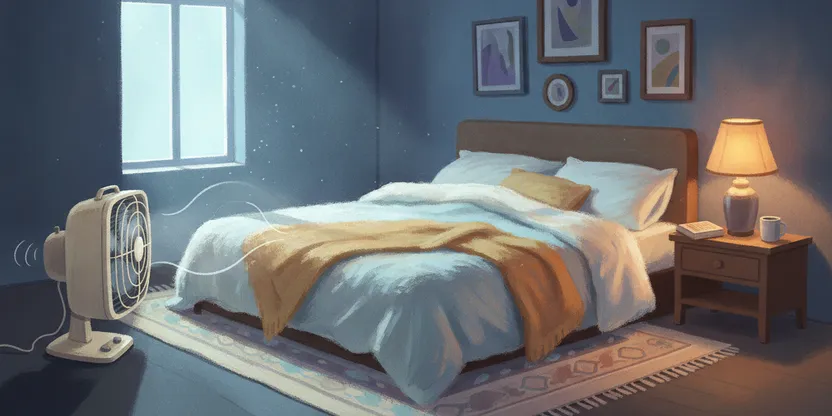
Fan noise for sleep: why it works, and how to take it anywhere
If you can't sleep without a fan, you're not imagining it: there are solid reasons steady fan noise works so well. Here's the why, and how to bring yours on every trip.
Read more
The warm bath trick: the best-evidenced thing nobody talks about
A meta-analysis of 17 studies found a specific temperature and a specific window before bed. It's free, it takes ten minutes, and almost nobody gets the timing right.
Read more
Progressive muscle relaxation: the sleep technique with the best numbers
A 2026 meta-analysis of 31 trials found a bigger sleep effect for tensing and releasing muscles than for bedtime music. Then there's the heterogeneity problem.
Read more
Does white noise help babies sleep? What the research says
The famous newborn study, what it did and didn't show, and the volume and placement guidance every parent using a sound machine should know.
Read more
Do sleep stories actually work? What the research says
We make sleep stories, so read us skeptically. Here's every study we could find, including the trial where wordless ambient audio did just as well.
Read more
Relaxation techniques for sleep, ranked by the evidence
Breathing, muscle relaxation, imagery, meditation, yoga nidra, hypnosis, and more: ten bedtime techniques, sorted by how much research stands behind them.
Read more
Sleepmaxxing: which parts work, which are risky, which are theater
The trend has produced one technique with a meta-analysis, one with an asphyxiation warning, and a lot of expensive theater. A guide to sorting them.
Read more
Get Sleepy: where to start with 1,100+ episodes
New to Get Sleepy, or overwhelmed by the back catalog? A friendly guide to finding your first (or next) perfect episode, by mood.
Read more
The best sleep podcasts to fall asleep to
What makes a sleep podcast work, and ten shows to try tonight, from story-led favorites to pure sound.
Read more
Why history is the perfect thing to fall asleep to
There's a reason 'history for sleep' became a whole genre: the past is fascinating, finished, and completely unable to worry you.
Read more
The best audiobooks to fall asleep to
Why some books put you to sleep better than others, plus eight classics, read slowly and softly, to start with tonight.
Read more