

Does classical music help you sleep? What the research shows
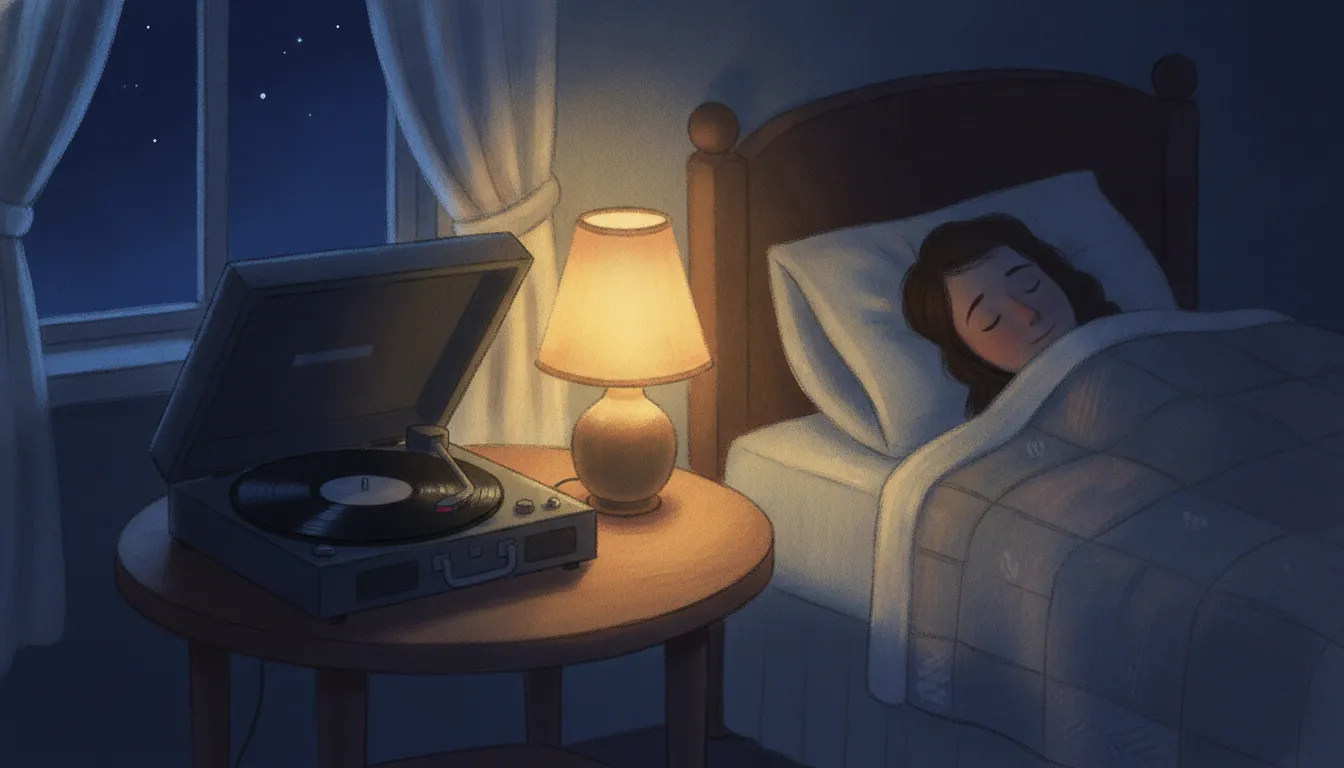
Classical is the genre people reach for at bedtime. In a survey of 651 people, 62% said they used music to help them sleep, and of the hundreds of pieces they named, about a third were classical, more than rock, pop, acoustic, and jazz put together (Trahan 2018). So does it actually work?
Mostly yes, with one large asterisk and one surprising catch. Music is one branch of a bigger question, which sleeping with sound covers end to end.
The evidence is better than you’d expect
The strongest summary is a 2022 Cochrane review covering 13 randomized trials and 1,007 adults with insomnia symptoms. Across the 10 of those trials (708 participants) that used the Pittsburgh Sleep Quality Index, people who listened to music at bedtime scored 2.79 points better than people who didn’t — a meaningful gap on a 21-point scale, and rated moderate certainty, which is generous by Cochrane’s standards (Jespersen 2022). No adverse effects turned up, which is not nothing for a sleep aid.
Individual trials fill that in. Ninety-four students with sleep complaints were split three ways (relaxing classical music, an audiobook, or nothing) for 45 minutes at bedtime over three weeks; the music group’s sleep quality improved significantly, and their depressive symptoms fell too (Harmat 2008). In a trial of 60 adults aged 60 to 83, the half who listened to 45-minute sedative music tapes for three weeks improved on nearly every component of sleep quality, and improved week over week, which the authors read as a cumulative dose effect (Lai 2005). One caveat: Lai’s tapes were soft, slow music broadly rather than classical specifically.
Here’s the awkward part for a company that makes bedtime stories: in that student study, the audiobook control group didn’t improve. It was one ordinary audiobook rather than something written to be soporific, and nobody has run the comparison we’d like to see, but we’re not going to pretend it came out the other way. We sit with that same uncomfortable pattern at length in do sleep stories work.
The asterisk: your body may not agree with you
Everything above is self-reported. When the Cochrane authors looked at the three trials (136 participants) that measured sleep with instruments rather than questionnaires, music did not improve sleep-onset latency, total sleep time, or sleep efficiency.
So the plain reading is that music reliably makes people feel like they slept better, and there’s little evidence yet that it changes the physical shape of the night. Whether that gap matters is a fair question (feeling rested is most of what anyone wants), but it is the gap.
One lab study did move the objective numbers: 27 women listening to relaxing music before a 90-minute nap got less light sleep across the board and more slow-wave sleep, though the slow-wave gain showed up only in participants who scored low on a suggestibility measure (Cordi 2019). Small study, strange moderator — worth watching rather than believing.
Why classical? Mostly tempo, not Mozart
There’s no evidence Mozart in particular does anything special. The famous “Mozart effect” was tested into the ground: a meta-analysis of nearly 40 studies and over 3,000 people found the effect negligible, with clear publication bias and noticeably bigger results from the original lab than from anyone else (Pietschnig 2010).
What does matter is speed. When researchers cycled people through several music styles while tracking heart rate, blood pressure, and breathing, the physiological effects followed tempo far more than genre: faster passages raised everything, and inserted silence dropped all of it below baseline (Bernardi 2006). Classical isn’t magic. It’s just where a lot of slow, quiet, wordless music happens to live. Words matter for concentration, too: in the focus research, lyrics are the most reliably disruptive ingredient.
Related: the “most relaxing song in the world” claim attached to Marconi Union’s Weightless traces back to an unpublished 20-person study commissioned by a bath products brand. When independent researchers later tested it against silence, aircraft noise, and monaural beats, it did lower skin conductance. But it beat nothing on heart rate, and it was worse than plain silence for breathing rate (Shepherd 2023).
The catch nobody mentions: earworms
This is the finding that should change what you queue up. Researchers surveyed 199 people and found that frequent music listeners had more nighttime earworms, and those earworms tracked with worse sleep. Then they tested it directly: 50 people in a sleep lab heard either lyrical or instrumental versions of familiar songs before bed. More of the instrumental group reported a sleep-related earworm (52% against 28%), though that gap just missed statistical significance (p = .051), and the authors put it no more strongly than instrumental music “seemed to” increase susceptibility. What did come out clearly was the sleep itself: the instrumental night produced poorer sleep efficiency and a longer time to fall asleep on polysomnography (Scullin 2021).
Stripping the words out doesn’t make music sleepier. It can leave a bare, sticky melody with nothing to compete against it. That study used familiar pop songs with the vocals stripped out, and its authors flag classical music as the obvious untested next step, so extrapolating is our inference, not their result. But if it holds, the classical pieces most likely to backfire are the famous ones — the Moonlight Sonata, Clair de Lune, the Adagio for Strings. A strong hook is a strong hook.
How to use it
- Slow and quiet beats beautiful. Tempo is doing the work; a memorable melody is a liability.
- Wandering over hummable. Ambient, minimalist, and lesser-known pieces give your brain less to loop.
- Set a timer. The trials used about 45 minutes at bedtime, not all night, which also keeps music from surfacing in your 3am awakenings.
- Give it three weeks. Both music trials above ran three weeks, and one found the benefit built over time. One bad night proves nothing.
- It isn’t treatment. For clinical insomnia, CBT-I is the first-line therapy and the evidence behind it is far stronger. Music is a good habit, not a substitute.
Try it tonight
Deep Sleep Sounds has calming instrumental music inside its library of 400+ sounds and tracks; set the timer and the music sees itself out. You can also lay the music under rain or steady noise, which gives a bare melody something to dissolve into. Thirty-five of the most-played sounds and two-sound mixes come free; the rest of the library and bigger mixes are Premium.
Sources: Trahan et al. 2018 · Jespersen et al. 2022 · Harmat et al. 2008 · Lai & Good 2005 · Cordi et al. 2019 · Pietschnig et al. 2010 · Bernardi et al. 2006 · Shepherd et al. 2023 · Scullin et al. 2021. This is general information, not medical advice — persistent insomnia is worth taking to a doctor.
Common questions
- Does classical music help you sleep?
- It reliably improves how people rate their sleep. Across 10 trials and 708 adults with insomnia symptoms, bedtime music scored 2.79 points better on a 21-point sleep-quality questionnaire, at moderate certainty, and no adverse effects turned up. The three trials that measured sleep with instruments found no change in how quickly people fell asleep, how long they slept, or how efficiently, so the gain sits in how the night feels.
- What kind of classical music is best for sleep?
- Slow and quiet beats beautiful. When researchers tracked heart rate, blood pressure, and breathing across music styles, the effects followed tempo far more than genre, and classical helps mainly because that is where a lot of slow, quiet, wordless music lives. Ambient, minimalist, and lesser-known pieces give your brain less to loop than the famous melodies do.
- Is Mozart especially good for sleep?
- There is no evidence Mozart does anything special. The famous Mozart effect was tested into the ground, and pooled across nearly 40 studies and over 3,000 people it came out negligible, with clear publication bias and noticeably bigger results from the original lab than from anyone else. Any slow, quiet piece is doing the same job.
- Why do I get a song stuck in my head at night?
- Nighttime earworms are more common in frequent music listeners, and in a survey of 199 people they tracked with worse sleep. When 50 people slept in a lab after hearing familiar songs, more of those given instrumental versions reported a sleep-related earworm, 52% against 28%, though that gap just missed statistical significance. Their instrumental night also produced poorer sleep efficiency and a longer time to fall asleep.
- How long should I listen to music before bed?
- About 45 minutes at bedtime is the dose the trials used, not all night, and a timer keeps music from surfacing again in a 3am awakening. Give it three weeks before you judge it: both trials above ran that long, and one found the benefit building week over week. One bad night proves nothing.