

Do sleep stories actually work? What the research says
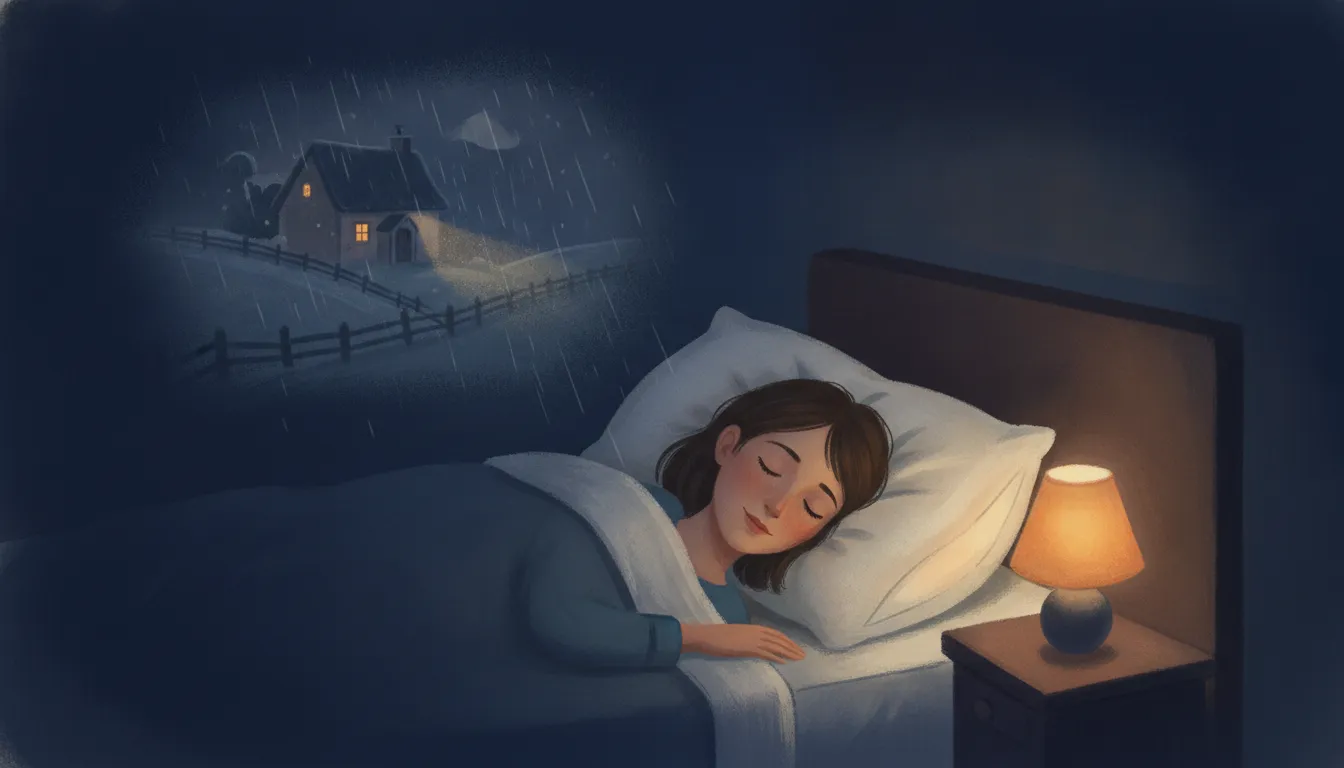
Narrated sleep stories have become a staple of sleep and wellness apps, and exactly one randomized trial has tested them directly. In 300 poor sleepers over four weeks it found large improvements in sleep disturbance and sleep-related impairment (Hedges’ g = 0.92 and 0.80), and three things temper that number before you repeat it: the trial was funded by the company whose content it tested, the comparison group was a waitlist, and wordless ambient audio did at least as well as the stories. We make sleep stories too, which means you should read this skeptically. So here is everything we could find, including the studies that don’t flatter us.
The one trial that tested them directly
In 2023, researchers ran 300 working adults with poor sleep through a four-week randomized trial: one group got narrated sleep stories, one got ambient audio, one waited. The stories group improved substantially on sleep disturbance (Hedges’ g = 0.92), sleep-related impairment (0.80), and total sleep duration (0.56) (Economides 2023). The first two are large effects; the third is a medium one.
We should be straight about the rest of that result, because it doesn’t flatter us: the ambient-audio group matched or beat the stories group on all three measures (1.09, 0.91, 0.57). The trial that most directly tests sleep stories found wordless sound did at least as well.
Now the part that should temper your enthusiasm: the study was funded in full by the company that makes the content, three of its four authors are employees of that company holding share options, participants knew which group they were in, and the comparison group was a waitlist. The authors say it themselves: “passive controls can lead to inflated estimates of treatment effects.” It’s a promising pilot, not a verdict.
Audiobooks keep getting used as the thing that shouldn’t work
Here’s the uncomfortable pattern. When researchers study bedtime music, they often need a plausible-but-probably-inert comparison, and they keep reaching for audiobooks.
In a three-week trial of 94 students, relaxing classical music significantly improved sleep quality while the audiobook group didn’t budge (Harmat 2008). In a later trial of 57 adults with diagnosed insomnia disorder, audiobooks were again the control arm against music. But that trial came out essentially null, with music showing no clear advantage on the primary insomnia-severity measure and no change in objective sleep (Jespersen 2019). So the summary is narrower than “audiobooks don’t work”: researchers keep assuming they’re inert enough to serve as a placebo, and only one of these two trials found music beating them.
There’s a distinction hiding in there, though: those were ordinary audiobooks. A novel is built to keep you awake, with tension, cliffhangers, a reason to find out what happens. A sleep story is built to be abandoned halfway. Nobody has run that comparison, so we can’t claim it’s been proven. We can only say it’s the untested question, and it’s the one that matters. It’s also why we’d bet which audiobook you pick matters more than the format.
The strongest evidence isn’t about audio at all
The best study here doesn’t involve headphones. Forty-one people with insomnia were given one of three sets of instructions at bedtime: distract yourself using vivid imagery, distract yourself generally, or nothing. The imagery group fell asleep faster and reported less frequent and less distressing pre-sleep thinking than the no-instruction group. Plain distraction didn’t do it (Harvey 2002).
That last detail is the whole thing. Telling your brain to stop thinking doesn’t work; giving it an engaging scene to occupy itself with does. Worry needs cognitive space, and a sufficiently absorbing imagined place takes that space up.
Which is a fairly precise description of what a sleep story is for. It’s an imagery-distraction task somebody else has done the work of building for you (the cottage, the rain on the window, the walk through the orchard), so you don’t have to generate one while tired and anxious. That’s a mechanism with independent evidence behind it, and it’s a better argument for the format than any study of the format itself. It’s the same engine we point to in the sleep meditation post: what works in a bedtime track is probably the imagery, not the mindfulness.
Stories do measurable things to people
Narrative also changes physiology. Children in pediatric intensive care were given either 30 minutes of storytelling or 30 minutes of riddles. The storytelling group showed increased oxytocin, decreased salivary cortisol, lower pain ratings, and more positive emotional language afterward (Brockington 2021).
That study isn’t about sleep, and it’s children in an unusual setting. But it used an active control — riddles, also engaging, also a person’s attention — which makes it harder to explain away as “someone was nice to them.” Something specific to story did that.
And the voice may matter as much as the words. In a survey of 475 people who experience ASMR, 82% used it to help them sleep, and 70% used it to cope with stress (Barratt 2015); in a lab study, people who experience ASMR showed heart-rate drops averaging about 3 bpm while watching ASMR videos, which non-experiencers didn’t, though their skin conductance went up at the same time, so the arousal picture is mixed rather than simply calming (Poerio 2018). Self-selected samples, and it’s about tingles rather than plot. But soft, slow, close-miked speech is one of the most reliable triggers there is, and that describes most good sleep narration.
The finding that should make you careful
One result cuts against all of this and deserves to be stated clearly. A network meta-analysis of 241 trials and 31,452 people picked apart which pieces of insomnia therapy do the work. Cognitive restructuring, sleep restriction, and stimulus control all helped. Relaxation was the one component rated potentially counterproductive (Furukawa 2024).
The estimate is uncertain, though: the confidence interval still crosses no-effect, and the authors say “potentially,” not “is.” The intuition we’d offer, which is ours rather than theirs: relaxing at bedtime may encourage you to lie in bed awake for longer, which works directly against sleep restriction and stimulus control, the two components that clearly do help. So if a sleep story keeps you lying there listening for an hour, it may be costing you more than it gives.
How to actually use one
- Pick something with nowhere to go. No cliffhanger, no stakes. If you want to know what happens next, it’s the wrong story. (Why history helps you sleep is this principle turned into a genre.)
- Set a timer, and don’t restart it. Rewinding to catch what you missed turns a sleep aid into entertainment.
- Don’t lie there indefinitely. If you’re awake and frustrated after 20 minutes or so, get up and do something dull in dim light. That’s standard stimulus control, and it beats waiting it out.
- Chronic insomnia needs more than this. CBT-I is the first-line treatment and its evidence is in a different league. A story is a bedtime habit, not a therapy.
What we make
Get Sleepy is our original stories, written to meander and end nowhere in particular. The Sleepy Bookshelf is classic novels read slowly enough that losing the plot is the point, and Sleepy History is true stories told gently. Snuggle is for kids. All of them are written and read by people — deliberate wandering isn’t a choice a generator makes on purpose (how we make our shows).
Sources: Economides et al. 2023 · Harmat et al. 2008 · Jespersen et al. 2019 · Harvey & Payne 2002 · Brockington et al. 2021 · Barratt & Davis 2015 · Poerio et al. 2018 · Furukawa et al. 2024. This is general information, not medical advice — persistent insomnia is worth taking to a doctor.
Common questions
- Do sleep stories actually work?
- One randomized trial has tested them directly: 300 poor sleepers used narrated stories for four weeks and improved substantially on sleep disturbance, daytime impairment, and total sleep time. The same trial found wordless ambient audio did at least as well, and it was funded by the company that makes the content, with a comparison group that simply waited. Treat it as a promising pilot rather than a verdict.
- Why do sleep stories help you fall asleep?
- The mechanism with the best independent support is imagery distraction. Forty-one people with insomnia were asked to occupy their minds at bedtime with a vivid imagined scene, and they fell asleep faster and reported less distressing pre-sleep thinking than people given no instruction, while plain distraction did nothing. A sleep story is that same task with the building work already done for you.
- Are sleep stories better than audiobooks for sleep?
- Nobody has run that comparison, so there is no evidence either way. What research exists used ordinary audiobooks as a probably-inert control against music, and only one of the two trials that did so found music beating them. The difference you would expect is in the design: a novel is built to keep you awake, and a sleep story is built to be abandoned halfway.
- How long should I listen to a sleep story?
- Set a timer and do not restart it, since rewinding to catch what you missed turns a sleep aid into entertainment. If you are awake and frustrated after 20 minutes or so, get up and do something dull in dim light. One large review even rated relaxation at bedtime possibly counterproductive, on an estimate uncertain enough that the authors said possibly, so lying there listening for an hour may cost you more than it gives.
- Can sleep stories treat insomnia?
- They are a bedtime habit, and chronic insomnia needs more than one. CBT-I is the first-line treatment and its evidence is in a different league than anything covered here. Persistent insomnia is worth taking to a doctor.