

Why nature sounds calm you down, according to actual research
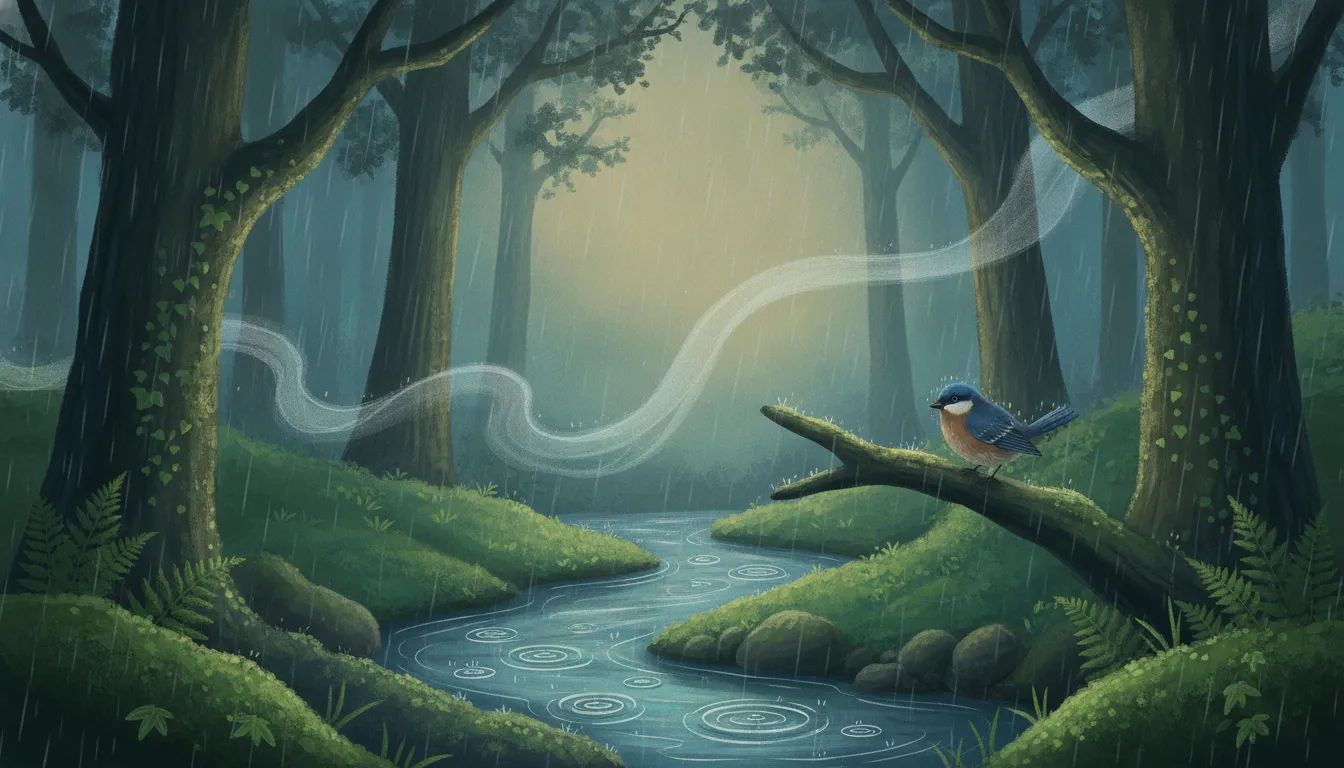
Put on rain sounds and something in you unclenches. That feeling is real: a 2021 PNAS analysis pooling 18 studies linked natural sound to lower stress and annoyance and better mood, with water sounds doing the most for mood and birdsong the most for stress. The research is also humbler than the headlines, and it mostly measures waking calm rather than sleep. Here’s what stands up. Our complete guide to sleeping with sound places nature sound against the other choices.
The body responds
The biggest overview so far is a 2021 analysis in PNAS that pooled 18 studies: listening to natural sounds was linked with lower stress and annoyance, along with reports of better mood and even decreased pain. In that synthesis, water sounds showed the largest average effect on mood and health measures, while birdsong did the most for stress and annoyance (Buxton 2021).
Individual studies fill in the picture. After a stressful math task, skin-conductance recovery tended to be faster in people listening to a fountain-and-birds soundtrack than to traffic noise (a trend rather than a clean result), and heart-rate variability showed no consistent difference (Alvarsson 2010). After a standardized stress test, both birdsong and streaming water helped cortisol return to baseline faster than a wind control — water fastest of all (Michels 2023). And in a randomized experiment with 295 people, just six minutes of birdsong lowered self-reported anxiety, while six minutes of traffic noise did the opposite to mood (Stobbe 2022).
Why it works (probably)
Two ideas keep showing up. First, nature sounds carry an ancient message: nothing is wrong here. Birds sing when there’s no predator around; steady water means the landscape is alive and calm. Second, they’re the opposite of alarm sounds: no sudden spikes, no speech to decode. A small brain-imaging study found people listening to natural soundscapes showed a shift toward “rest and digest” nervous-system activity and even reacted faster on an attention task, though how much depended on each person’s starting state. Nature sound doesn’t hit everyone equally (Gould van Praag 2017); background sound and concentration is its own contested topic, which sounds for focus gets into.
The steadiness is doing quiet work as well. A sound with no sudden jumps also covers the ones your street produces, which is the noise-color story told in rain instead of static.
Where the evidence stops
Most of these studies are short lab sessions with healthy volunteers, often comparing nature sounds to traffic noise rather than to silence. When researchers compare against simple quiet, bodies still respond but people don’t always report feeling less stressed (Fan 2024). Almost none of it measures sleep directly. So we’ll say it plainly: this research is about feeling calmer while awake. Calmer is a lovely place to fall asleep from, but that last step is our inference, not a lab result. And none of this is medical advice; if anxiety is interfering with your life, that’s a conversation for a professional, not a rain recording.
Bring the outdoors in
If you want to try it tonight: Deep Sleep Sounds has ocean waves, soothing rain, distant waterfalls, and birdsong you can mix to taste, and the Deep Sleep Sounds podcast serves long soundscapes wherever you listen — free, or ad-free and eight hours long on Premium.
Sources: Buxton et al. 2021 · Alvarsson et al. 2010 · Michels & Hamers 2023 · Stobbe et al. 2022 · Gould van Praag et al. 2017 · Fan & Baharum 2024.
Common questions
- Do nature sounds reduce stress?
- A 2021 analysis in PNAS pooled 18 studies and linked natural sound with lower stress and annoyance, better mood, and even less reported pain. Water sounds showed the largest average effect on mood and health measures, and birdsong did the most for stress and annoyance. Most of the underlying studies are short lab sessions with healthy volunteers, so the finding covers brief listening in controlled settings.
- Which nature sound is most relaxing?
- It depends on what you are after. In the pooled research water sounds led on mood while birdsong led on stress and annoyance, and in a lab stress test both birdsong and streaming water brought cortisol back to baseline faster than a wind control, with water fastest. Six minutes of birdsong lowered self-reported anxiety in a randomized experiment with 295 people.
- Do nature sounds help you sleep?
- Almost none of this research measures sleep directly; it is about feeling calmer while awake. Calmer is a good place to fall asleep from, though that last step is our inference. The steadiness of a nature recording does cover the sudden street noises that pull you toward waking, and that masking effect is better established.
- Why do nature sounds calm people down?
- Two explanations keep coming up. Nature sounds carry a signal that nothing is wrong: birds sing when no predator is around, and steady water means a calm landscape. They are also the opposite of alarm sounds, with no sudden spikes and no speech to decode, and a small brain-imaging study found listeners shifted toward rest-and-digest nervous-system activity, though how much depended on each person's starting state.
- Are nature sounds better than silence?
- The comparison is less settled than it looks, because most studies pit nature sounds against traffic noise instead of quiet. When researchers do compare against simple quiet, bodies still respond but people don't always report feeling less stressed.