

Binaural beats for sleep: what the evidence supports
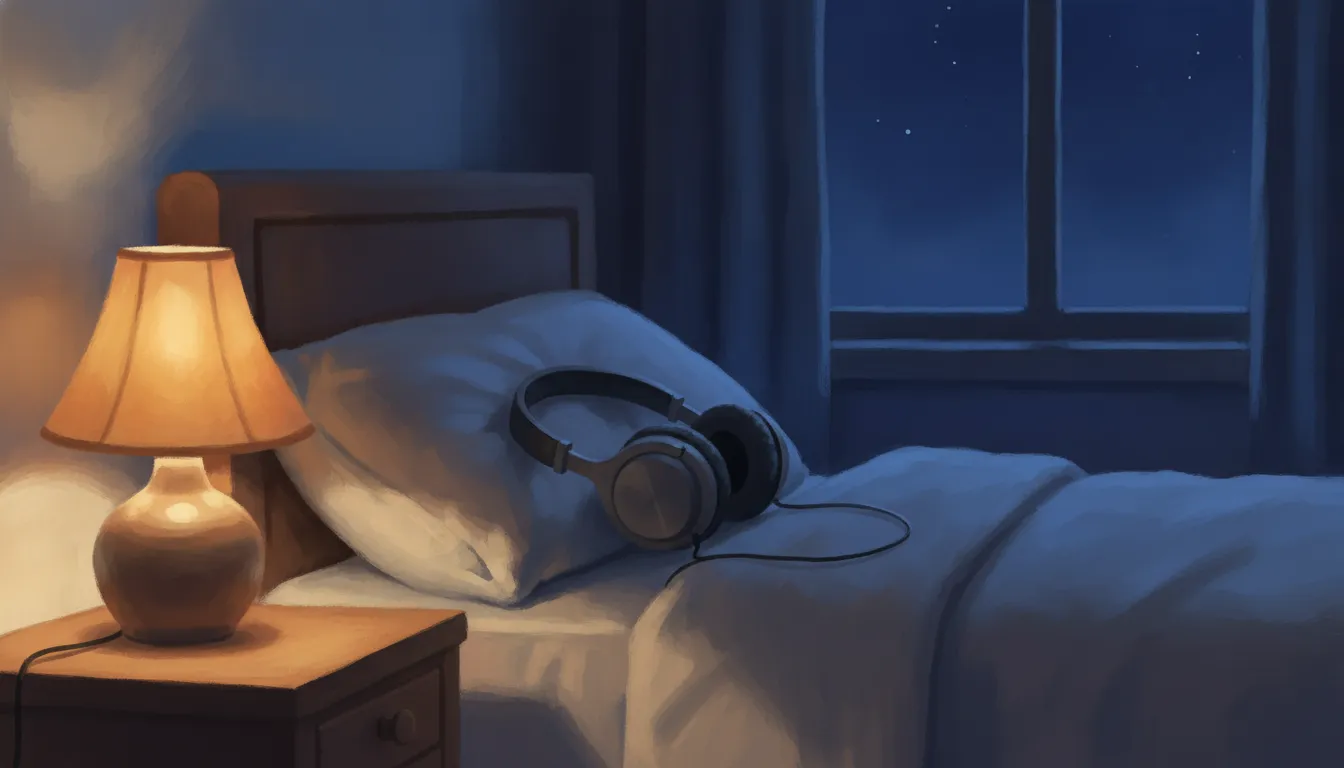
Play a 200 Hz tone into one ear and a 204 Hz tone into the other, and you’ll hear a pulsing 4 Hz throb that exists in neither recording. Your brain manufactures it from the difference. That’s a binaural beat, and the claim built on it is that the beat frequency coaxes your brainwaves to match: 4 Hz for deep sleep, 10 Hz for calm, and so on. It’s the mechanism behind a large slice of the sleep audio on YouTube, and a staple of sleepmaxxing routines.
The entrainment story is more confident than the evidence. The evidence isn’t nothing, though.
What the pooled research shows
A meta-analysis gathered 22 studies producing 35 effect sizes and found binaural beats had an overall medium, significant, consistent effect of g = 0.45 (Garcia-Argibay 2019).
Read that carefully, because it’s the number that gets quoted at you. The outcomes pooled there were cognition, anxiety, and pain perception, not sleep. It’s evidence that binaural beats do something measurable to people. It is not evidence that they help you sleep.
Two practical findings from the same analysis are worth keeping. Exposure before a task, or before and during, worked better than exposure during it alone, so listening as you wind down beats switching them on once you’re already in bed and frustrated. Longer sessions also did better than short ones. And usefully, masking the beats with white or pink noise made no difference to effectiveness, so you can layer them under something more pleasant without losing anything.
The one sleep study with EEG
The most directly relevant work is recent and small. Twenty healthy students slept three nights, one with a delta binaural beat on a 174 Hz carrier tone and two without, with EEG measuring what happened.
The result splits cleanly. The beat did not reduce the time it took to fall asleep. It did improve sleep maintenance: more time in N3 and REM, and fewer awakenings (Dabiri 2026).
That’s an interesting shape, and the opposite of what most people buy them for. If you’re lying awake unable to drop off, this isn’t the tool the evidence points to. If you fall asleep fine and then surface four times a night, it’s more promising. Twenty students and one night of exposure, though, so hold it loosely.
Two things that undercut the marketing
You need headphones. The whole effect depends on each ear receiving a different frequency. Played through a speaker the tones mix in the air and there is no binaural beat, just two tones. Every binaural beats track playing on a bedside speaker is delivering none of the proposed mechanism.
Which raises an awkward practical question, since sleeping in headphones all night is uncomfortable for most people and not ideal for your ears.
Entrainment is a hypothesis, not a finding. The idea that your brainwaves lock onto the beat frequency is the theory under test, not a settled fact. The Dabiri team suggests EEG synchronization as a possible explanation and says outright that more research is needed to confirm it. Anyone selling you a specific Hz for a specific outcome is well ahead of what’s known.
What we’d suggest instead
If the appeal is steady sound that helps you stay asleep, the mechanism with far more evidence behind it is plain acoustic masking: sound that covers the door slams and traffic that would otherwise wake you. That needs no theory about brainwaves, works through a speaker, and the colors-of-noise post goes through the research.
Deep Sleep Sounds has the full palette, white, pink, brown, and green noise plus rain, fans, and ocean, with 35 sounds free and Premium for the 400+ library. If you do want to try binaural beats, layering them under something else is supported by that meta-analysis, and it makes the headphones a little more bearable.
Sources: Garcia-Argibay et al. 2019 · Dabiri et al. 2026. See the full ranking of bedtime techniques. This is general information, not medical advice — persistent insomnia is worth taking to a doctor.
Common questions
- Do binaural beats work for sleep?
- The evidence points more toward staying asleep than toward dropping off. In the only sleep study to record brain activity, 20 students listening to a delta beat spent more time in deep sleep and REM and woke fewer times, with no change in how long they took to fall asleep. The pooled result people usually quote, a medium-sized effect across 22 studies, came from outcomes like thinking tasks, anxiety, and pain perception, so it does not speak to sleep at all.
- Do you need headphones for binaural beats?
- You do, because the effect depends on each ear receiving a different frequency. Through a speaker the two tones mix in the air before they reach you, and no beat is produced. That is an awkward requirement at bedtime, since sleeping in headphones all night is uncomfortable for most people.
- What frequency of binaural beats is best for sleep?
- There is no established answer. The idea that your brainwaves lock onto the beat frequency is still a hypothesis, and the researchers behind the sleep study offered brain-wave synchronization only as a possible explanation needing confirmation. Their study used a delta beat on a 174 Hz carrier tone, which is one setup somebody has tested, and anyone selling a precise frequency for a precise outcome is well ahead of what is known.
- Can you play binaural beats with white noise?
- Layering works fine. Masking the beats with white or pink noise made no difference to how well they worked in the pooled analysis, so you can put them under something more pleasant. That same analysis found longer sessions did better than short ones, and listening as you wind down did better than switching them on once you are already in bed.