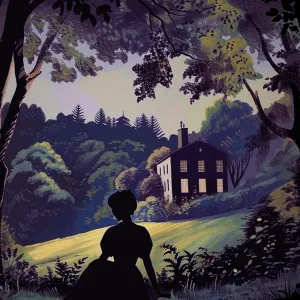

Princess Fairytales sets two old French stories side by side: a castle that sleeps for a hundred years, and a princess set adrift on the open sea.
In The Sleeping Beauty in the Wood, a king and queen invite every fairy in the land to their daughter's christening and overlook one very old one. Slighted, she promises the child will be pierced by a spindle and die of it. A younger fairy softens the curse to a hundred years' sleep, and years later the spindle finds the princess anyway. The whole household goes down with her, guards asleep on their feet and a few drops of wine still in the goblets, while a thick wood grows up around the walls and hides the castle from the world.
Princess Rosette comes from Madame d'Aulnoy, who told her tales in the Paris salons of the 1690s. Fairies warn at Rosette's christening that she will bring ruin on her two brothers, so she is shut up in a tower. When her brothers finally let her out, she sees a peacock in the garden and decides she will marry the King of the Peacocks or no one at all. The search for him puts her on a boat with a nurse who wants the crown for her own daughter, and one night Rosette is tipped over the side, feather bed and all, without ever waking.
These are wonder tales rather than the tidy nursery versions, courtly and strange, out of the French salon tradition that Perrault and d'Aulnoy shaped between them. Anyone who knows Sleeping Beauty only from a retelling will find the older story quieter and a good deal odder than expected.
Elizabeth Grace reads both as though she has nowhere else to be, which suits the material: half of one story is a castle asleep in a wood, and half of the other is a girl afloat on a feather bed, out at sea, sleeping through all of it. You are unlikely to make it back to shore with her.
On the podcast
 The Sleepy BookshelfSeason 14 · 2 episodes
This season is a Premium exclusive.